
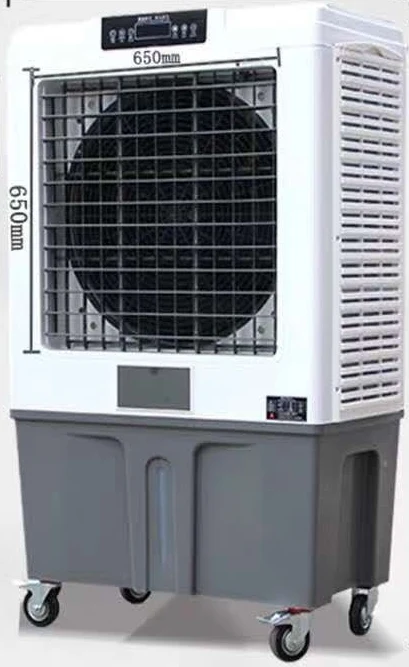
The right cooling equipment depends on how your space is used, how air moves through it and the conditions you need to maintain. Start with the application before choosing a model or comparing airflow figures.
Understand the two cooling methods
A direct evaporative air cooler draws warm air through water-wetted cooling pads. As some of the water evaporates, it absorbs heat. A fan delivers the cooler air into the space, along with added moisture.
A compressor air conditioner uses a refrigerant cycle to transfer heat. It can also remove moisture from the air. Portable and industrial spot units have installation and heat-exhaust requirements that need to be planned for the application.
Look at ventilation and humidity
Evaporative cooling needs a continuous supply of fresh air and a suitable exit path. It is often considered for open or semi-open working areas, warehouses and event spaces. An enclosed room with limited air exchange needs a different assessment.
Incoming humidity affects the available temperature drop. In humid conditions, the drop is smaller. This is especially relevant when planning cooling in Malaysia: equipment selection should account for actual site conditions rather than an assumed temperature reduction.
Decide what needs cooling
Tell the supplier whether people move across the whole area or work at fixed stations. Space cooling distributes air across a working area. Spot cooling directs it toward specific locations. The layout affects equipment placement, ducting and the required airflow.
For temporary setups, check where each unit can stand, how it will receive power and water, and how air or exhaust will leave the area. Consider nearby guests, equipment and access routes when reviewing the proposed positions.
Compare equipment against your space
Kpacific’s portable air cooler range includes models with different airflow, tank capacity, power and dimensions. Those specifications help narrow the options, but an airflow figure alone does not establish suitability for every venue.
Share your location, approximate dimensions, ceiling height, activity and ventilation arrangements. Photos or a floor plan help the team understand the application. For air conditioners, include information about an available exhaust route and the electrical supply.
Prepare a useful enquiry
- Describe the people, activity and area that need cooling.
- Explain whether the space is open, semi-open or enclosed.
- Provide photos, power information and any placement restrictions.
Ask Kpacific to discuss the equipment and installation requirements for your specific application. Confirm the final model and service scope in your quotation.
Explore cooling equipment or read how evaporative cooling works.