Cooling, ventilation & equipment rental

Home / Learn / Evaporative cooling
UNDERSTAND YOUR COOLING
The principle of
evaporative cooling.
Water evaporates. Heat is absorbed.
Moving air carries the cooling effect into your space.
Understanding direct evaporative air cooling
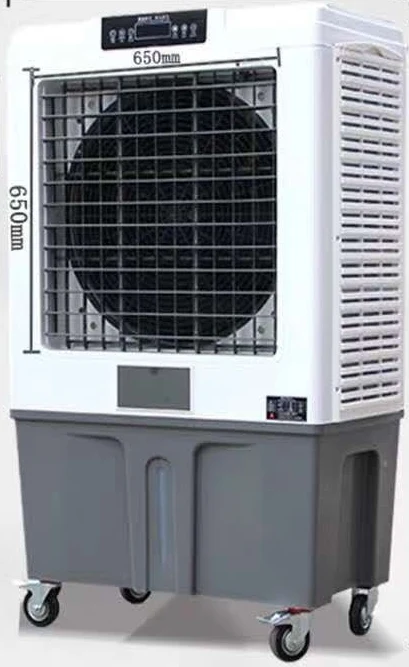
Portable air cooler · PC-180C
How water and airflow work together.
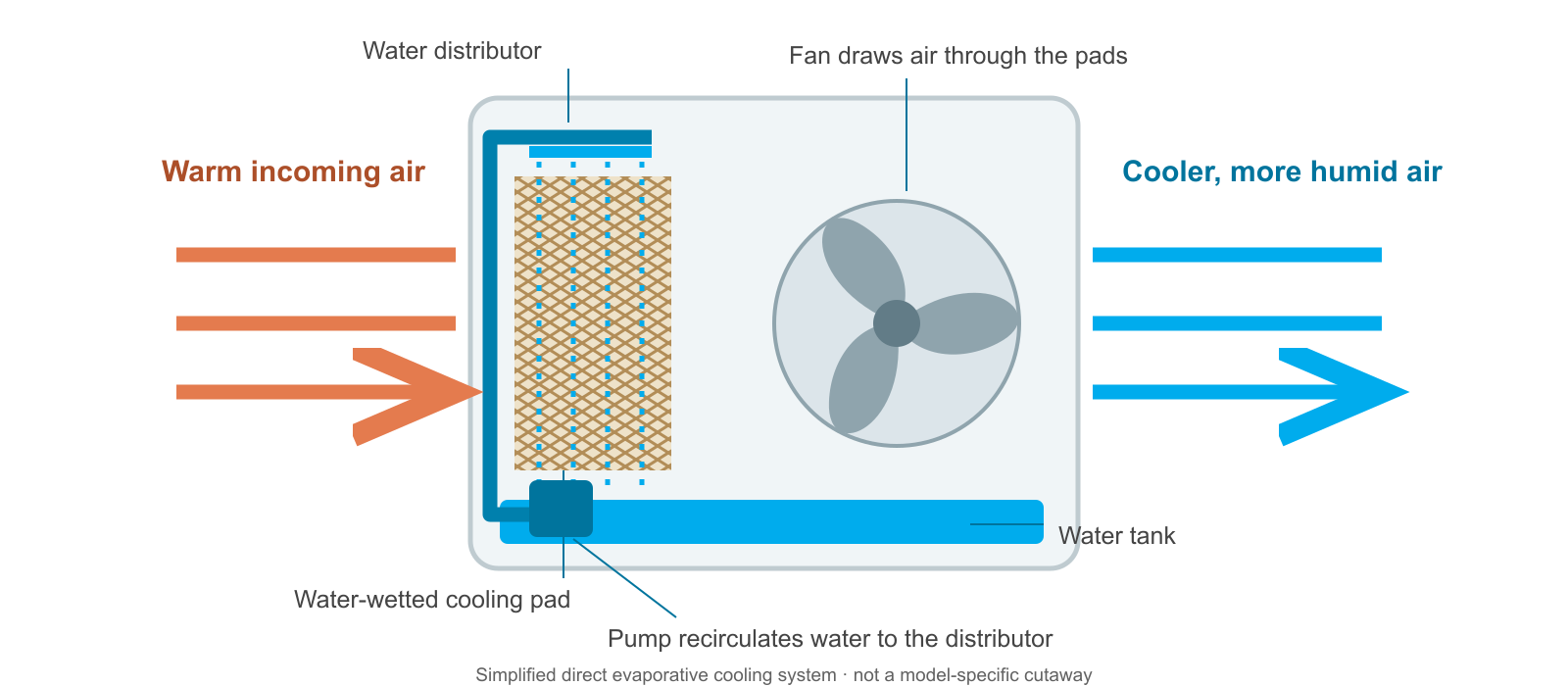
A direct evaporative cooler draws warm air through water-wetted pads. As some of the water evaporates, it absorbs heat from the air. The fan then delivers cooler air with added moisture into your space.
01
Water wets the pads
A pump circulates water from the tank to a distributor, keeping the cooling pads wet.
02
Air passes through
The fan draws incoming air through the water-wetted pads.
03
Evaporation absorbs heat
Some water changes into vapour, using heat from the air and lowering its temperature.
04
Fan moves cooled air
The fan delivers cooler, more humid air into a ventilated space.
Air cooling is not the same
as air conditioning.
Evaporative air coolers and compressor air conditioners use different technologies. Their suitability depends on the space, ventilation and cooling requirement.
Evaporative air cooler
Compressor air conditioner
Cooling method
Water evaporation (direct evaporative cooling)
Refrigerant cycle (vapour compression)
Moisture
Adds moisture to the air
Can remove moisture while cooling
Space requirements
Needs fresh air and an air exit path
Usually conditions an enclosed space
The right conditions
make the difference.
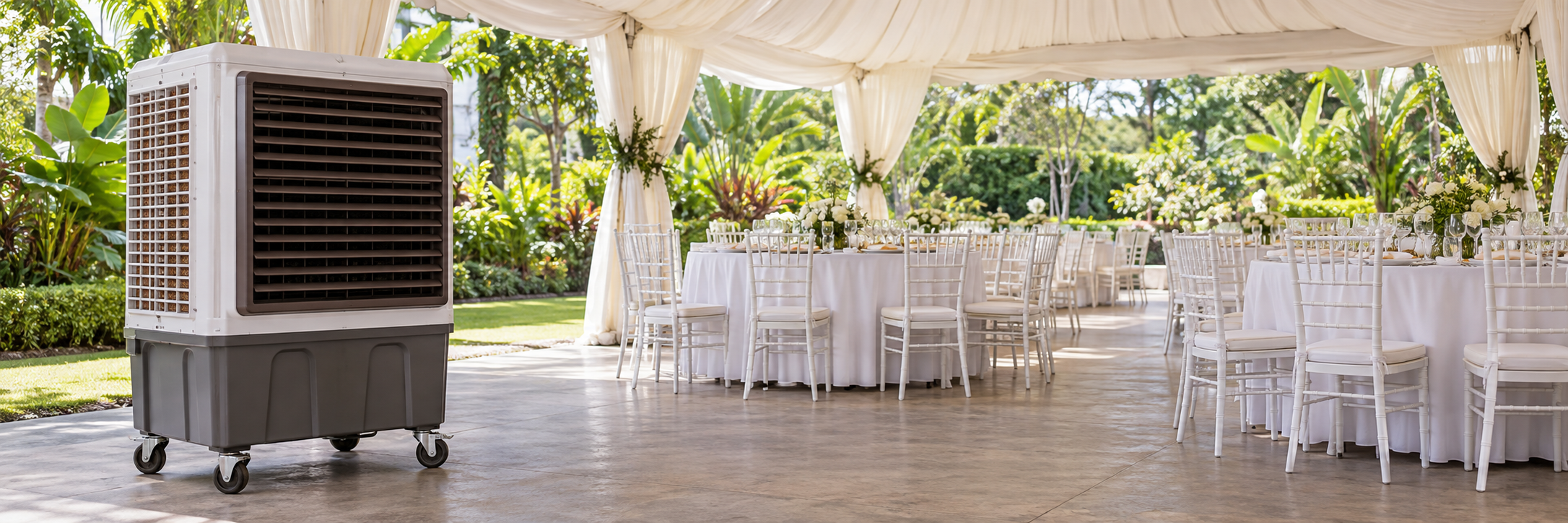
Direct evaporative cooling performs best when incoming air is relatively dry. In Malaysia’s humid climate, the temperature drop can be limited. Assess the actual conditions before choosing equipment.
Incoming humidity
Lower relative humidity gives more potential for evaporation and cooling.
Fresh airflow and an exit path
Provide fresh incoming air and a route for warm, moist air to leave.
Water supply and clean pads
Maintain the water circuit and cooling pads in line with the manufacturer’s instructions.
Equipment suited to the application
Airflow, heat load, occupancy and layout all affect suitability.
In humid conditions, the temperature drop is smaller.
Ask us to assess your space.
FREQUENTLY ASKED QUESTIONS
Before choosing
your cooler.
Does an evaporative cooler add moisture?
Yes. Direct evaporative cooling adds water vapour to the air as part of the cooling process. This is why ventilation and incoming humidity matter.
Can it be used in a sealed room?
A sealed room is generally unsuitable for continuous direct evaporative cooling. Fresh airflow and an exit path are needed to prevent moisture building up.
What affects the cooling performance?
Incoming temperature and humidity, ventilation, airflow, heat load, pad condition and water distribution all affect performance. A fixed temperature reduction cannot be guaranteed.
Further reading: evaporative cooling guidance from the Queensland Government.
Not sure if evaporative cooling suits your space?
Tell us about your application, ventilation and cooling requirements.